Hardware
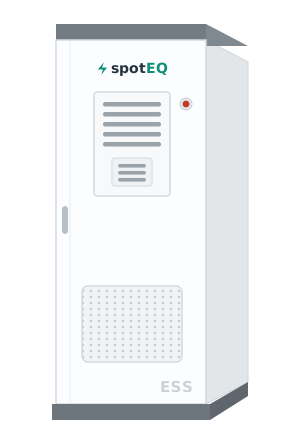
spotEQ Battery
Stores energy for use during demand peaks and expensive periods.
Battery systems for commercial and industrial sites with high demand peaks or limited connection capacity.
We size the system from your meter data and calculate what it would have saved before making a proposal. Battery, controls and installation are supplied together.
No cost About one week after we receive the data
Lower electricity charges and less need to expand the grid connection.
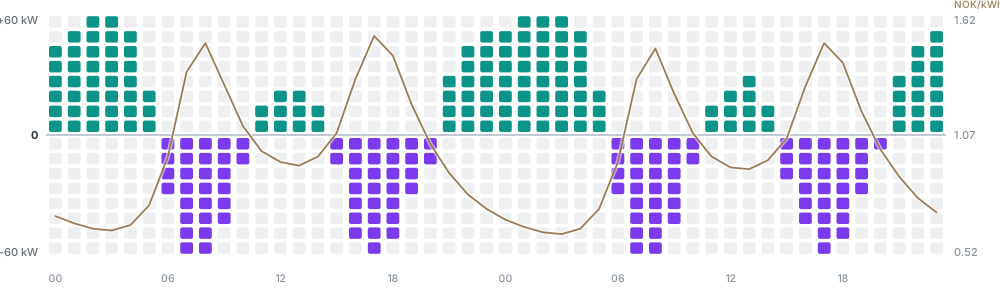
Where the grid tariff includes a capacity charge, reducing demand peaks can lower the bill. The battery supplies part of the site load during these periods, reducing the peak measured at the grid connection.
The battery charges in lower-cost periods and supplies energy when prices rise. The calculation accounts for the site tariff and battery losses. Any control of other equipment is assessed separately.
A battery can make room for additional equipment within the existing connection. We assess this from the size and duration of the added load before recommending a system.
Assumes a 50 kW reduction in the billed peak in every month, at NOK 75/kW/month: 50 × 75 × 12 = NOK 45,000. This is a capacity-charge illustration, not a customer result or a return on investment. Rates and billing rules differ between grid companies.
We compare estimated savings with the proposed system cost. Additional savings depend on prices, equipment and the site’s consumption.
The control software runs on real hardware, and we are planning the first installations. We are looking for businesses with high demand peaks or plans to add electrical equipment. Pilot terms are agreed individually. You work directly with the engineers developing the system, and operation starts with a test period before automatic control is enabled.
Ask about a pilotBattery, control unit and software, delivered and commissioned by one supplier.
Stores energy for use during demand peaks and expensive periods.

Controls the connected equipment on site.
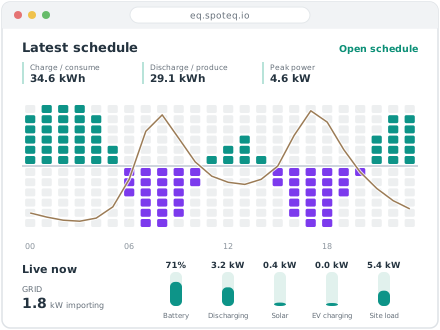
Calculates the energy plan and shows operation and estimated savings.
We compare the estimated saving with the proposed system cost before you decide whether to proceed.
Twelve months of interval data from the meter show where the peaks come from and what the system would have saved.
About a week after receiving the data, no costSizing in kW and kWh, price, and expected annual saving separated by source.
One to two weeksYou review the cost, estimated savings and assumptions before deciding whether to proceed.
Installation follows an agreed proposalTell us about the site and any planned changes. We will follow up about twelve months of meter data and the current tariff. The analysis costs nothing and takes about a week after we receive the data.